Background
ECOMB AB has significant experience in applying air injection into specific areas of a combustion plant to optimise combustion and minimise emissions of CO and NOx at numerous sites worldwide since 1992. In recent years we have also developed a technique to inject pure oxygen instead of air. This inspired us to apply our knowledge of the physical and chemical processes involved, to inject oxygen into lakes and coastal waters suffering from oxygen depletion, as this is a significant environmental issue.
The potential clients and markets for this service are different to those of the parent company ECOMB AB. We decided therefore to form a separate company called “ECOMB Ocean Recycle AB” which was incorporated in 2018.
“Ocean Recycle One” is our first custom designed vessel equipped with mobile oxygenation equipment, pumps etc. A raft carries a 20 ft container housing the PSA (Pressure Swing Adsorption) oxygen generator. The vessel will slowly travel over the target area whilst injecting oxygen into the water through diffusers that are lowered to a suitable water depth. The roof of the container is equipped with solar cells and a wind turbine which charge the batteries used to operate the oxygenation equipment and instrumentation. This vessel was launched in December 2021 and completed initial testing before the lake froze for the season.
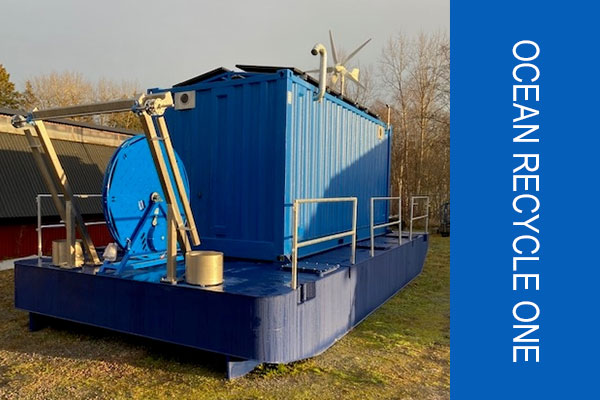
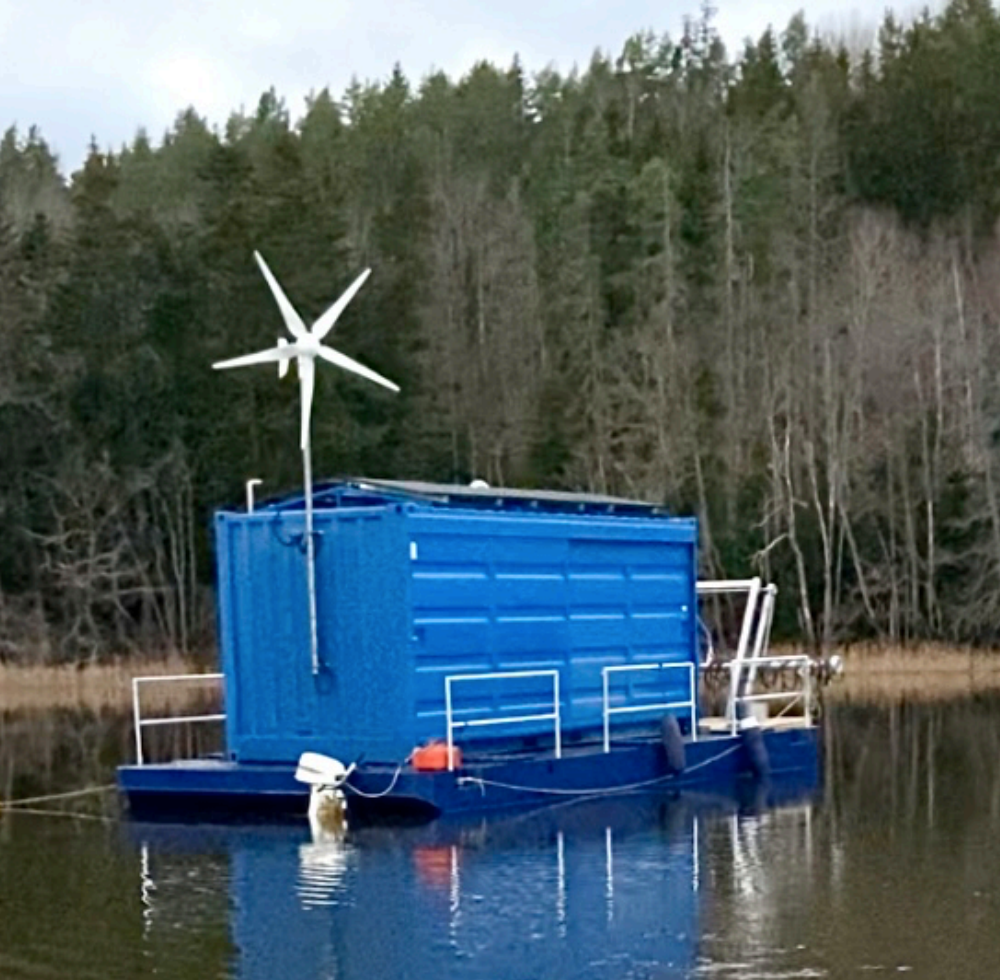 Ocean Recycle One in Dynestadsjön, a marine lake connected to the Baltic Sea, close to the town Gamleby.
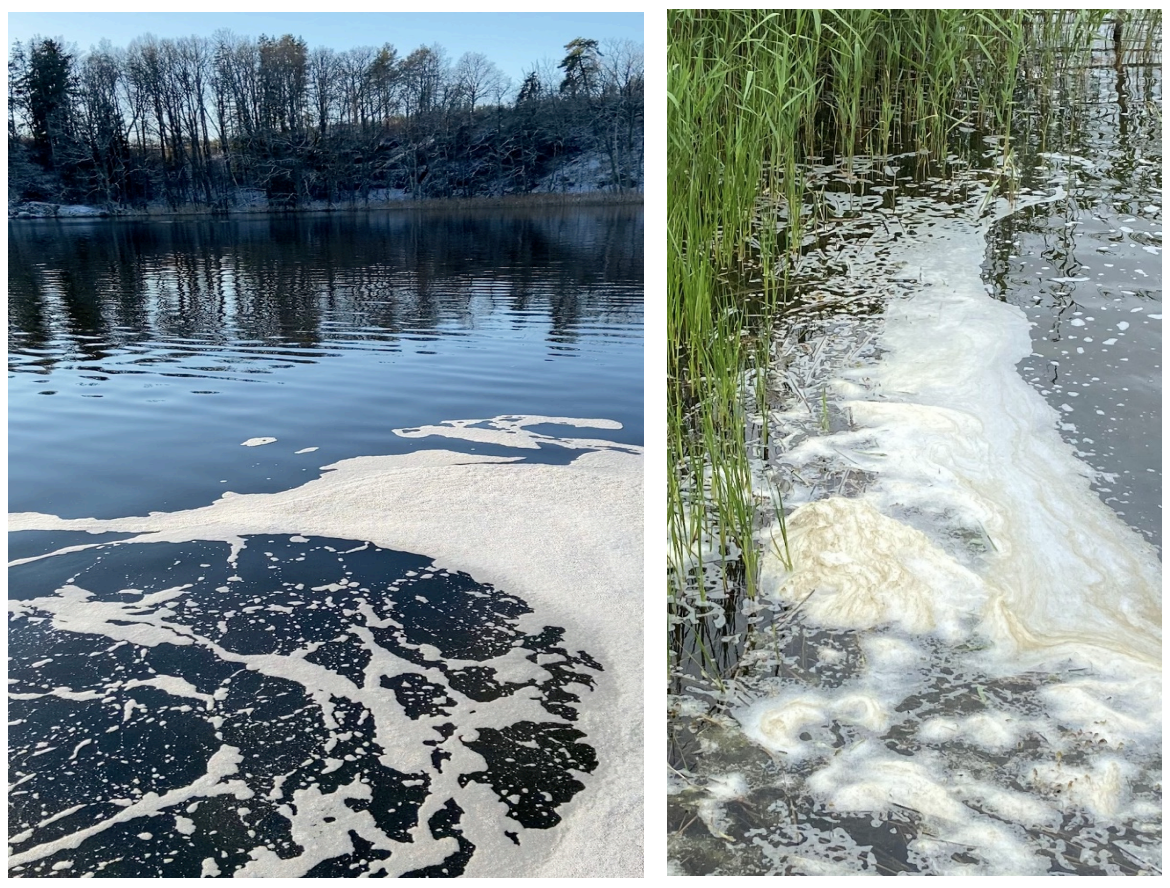 Foam with high concentrations of PFAS was formed when our oxygenation vessel was running in Dynestadsjön.
Initial tests and analyses of the water in Dynestadsjön, using our oxygenation technology, did show that the theories regarding the possibilities for PFAS treatment are correct and that we could remove large amounts of PFAS from the water. The key is to achieve a redistribution in the water mass, to concentrate PFOS in the surface foam that can be collected for destruction in a suitable combustion plant. The high temperatures required (>1200 °C), sufficient residence time and strong turbulence can be created using the Ecotube technology provided by our mother company (ECOMB AB).
The discovery of PFAS in Dynestadsjön led us to a new business area
In 2022 during exploration of the operating range of the oxygenation equipment in Dynestadsjön, we found that a foam was formed on the water surface under certain operating conditions. This was initially believed to consist of proteins from decaying plant and animal matter in the water, but analysis showed that the foam contained significant amounts of the “forever chemicals” PFAS. So, we were now in a situation where we could remedy oxygen deficiency in lakes and coastal water but also remove significant amounts of this problematic group of chemicals from the water through skimming off the foam.
The sum of the 11 most common PFAS molecules (Σ11PFAS) from the collected surface water/foam during the testing in Dynestadsjön was analysed by an accredited laboratory. The findings were that the oxygenation operation increased the concentration of PFAS and PFOS (one of the members of the PFAS group) significantly in the surface water/foam in the injection area, as shown in the table below.
In summary:
- The PFOS concentration in the surface water/foam increased 500 times and PFAS increased 100 times after oxygen injection. These are chemicals that were removed from the lower water and made accessible for capture in the surface water/foam.
- This test was carried out without any optimisation, so it is expected that further improvements of the capture efficiency can be achieved.
- Also, these tests were carried out with the oxygen diffusers at a depth of 6 meters, whilst the lake was 12 m deep in that area, so this was only PFAS present in the middle of the water body concentrating to the surface/foam.
- The bottom sediment remained untouched during this test. We expect to be able to remove PFAS from greater depths by positioning the diffusers at the bottom of the lake.
The PFAS-raft
We are currently building a dedicated "PFAS raft" in addition to the oxygenation raft mentioned earlier.
Here are some parameters for the new raft:
- Size approximately 6 x 4 m
- Significantly lighter than the 13 tons of the oxygenation raft
- Stationary basic operation
- Designed for swift relocation from one water body to the next
- Flexible operation using oxygen or air depending on the local requirements
- Efficient operation, i.e. able to remove large amounts of PFAS per unit of time
- Designed for combined operation with phytosanitation during the summer and other technology, e.g. evaporation, during the winter
- Destruction of collected PFAS containing foam will take place in incineration plants – which is the parent company ECOMB AB's speciality.
Foam fractionation
The technology we are developing is a variant of the well-established technique foam fractionation that can be used to separate and remove PFAS from water. The PFAS molecules have a tendency to accumulate on the interface between air and water on the surface of bubbles, making this an ideal technology for the capture of PFAS molecules. Our approach is unique in that we carry out the foam fractionation “in situ” in the lake, rather than in the water treatment plant.
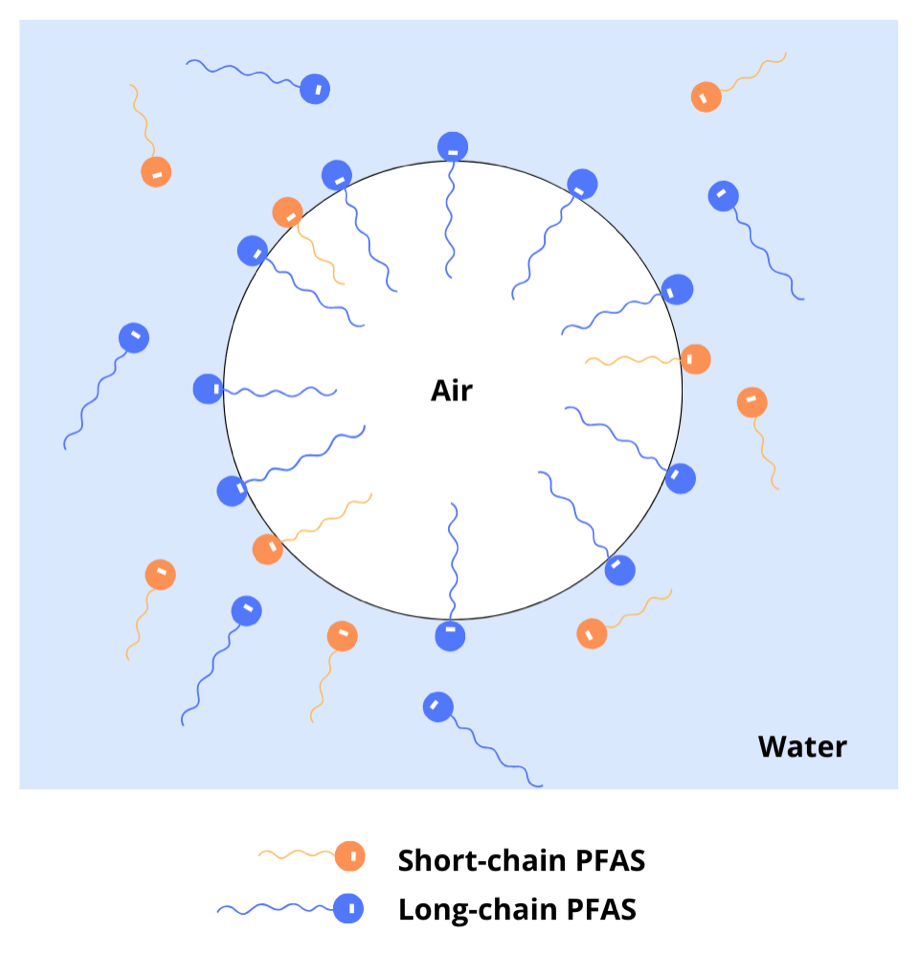 An air bubble adsorbs various PFAS molecules on their way up to the water surface with Ocean Recycle's technology.
The difference from conventional foam fractionation is that we do this directly in the lake
– before the untreated water enters the waterworks for final treatment into drinking water!
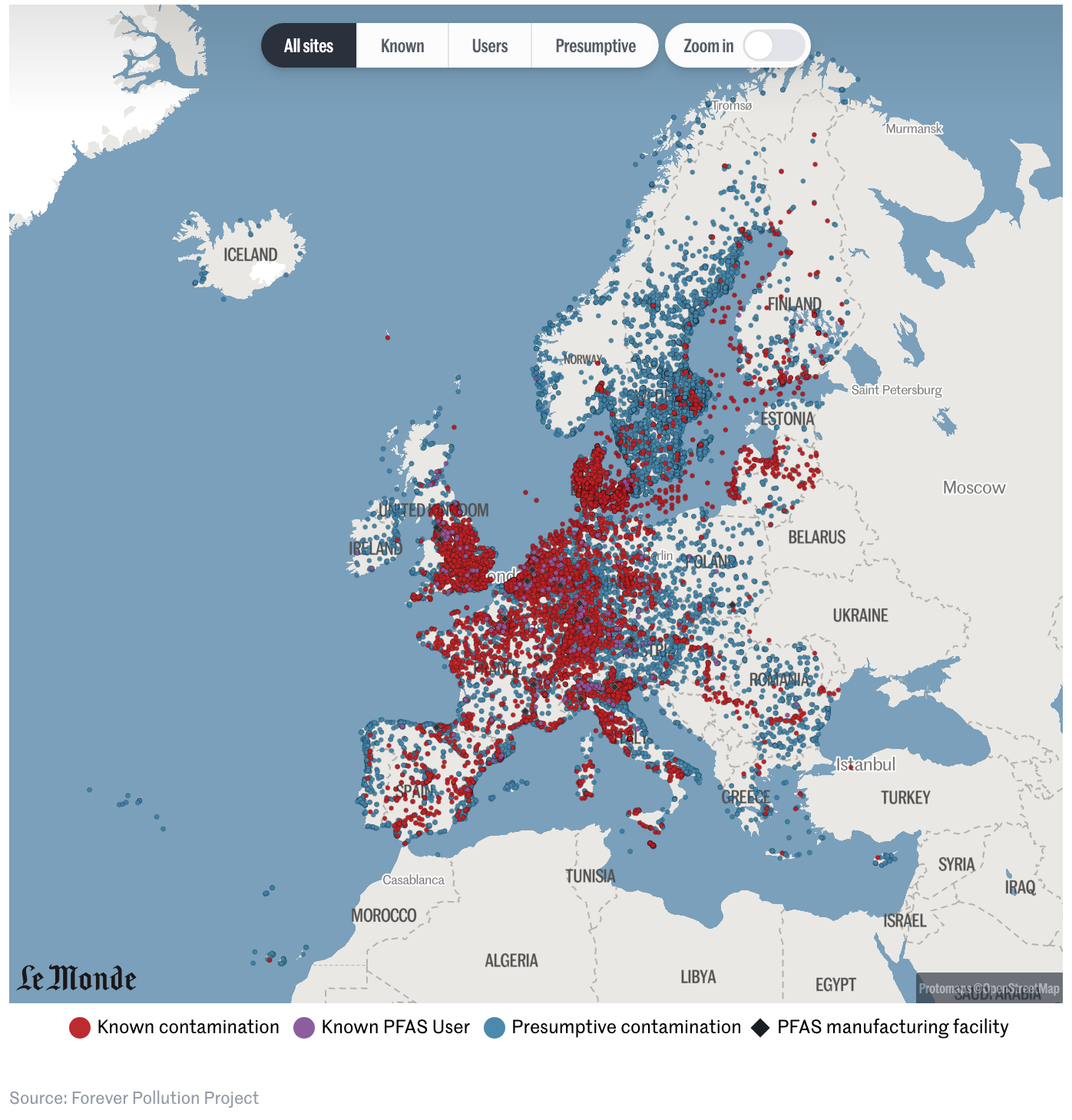 PFAS contamination i Europe. Source: Forever Pollution Project
What is PFAS and what legislation applies
PFAS (Per- and polyfluorinated alkyl substances) are a group of so called “forever chemicals” that are used during the manufacture of shoes, upholstery, ski wax, food packaging, firefighting foam, frying pans, pesticides, beauty products, etc. PFAS has been manufactured and used since the 1950s, but only recently are we starting to fully appreciate the risk they pose to the environment and to our health.
PFOS (perfluorooctane sulfonate) is perhaps the most common PFAS compound. It is very stable and takes a very long time to break down naturally, if ever. It accumulates in organisms, is toxic and disrupts reproduction. PFOS is among the substances used to determine the quality of a body of water. Concerning PFOS concentrations are regularly measured in surface waters.
Half of the drinking water in Sweden comes from surface water sources. This means that treatment of lake water can significantly lighten the burden on the waterworks to meet increasingly stringent standards.
New limit for PFAS in drinking water 2026
The recast Drinking Water Directive requires EU member states to monitor PFAS levels in drinking water and act to reduce levels if safe limits are breached.
Sweden implemented a new limit of 4 ng/l for PFAS in drinking water in January 2026. Denmark has set the corresponding limit at 2 ng/l, which indicates that further tightening of the Swedish limit may be necessary in the future.
Widespread PFAS pollution across Europe
In 2023, the “Forever Pollution” project has identified nearly 23 000 sites in Europe that are contaminated by PFAS. Denmark, England, Germany and the Netherlands are especially heavily affected.